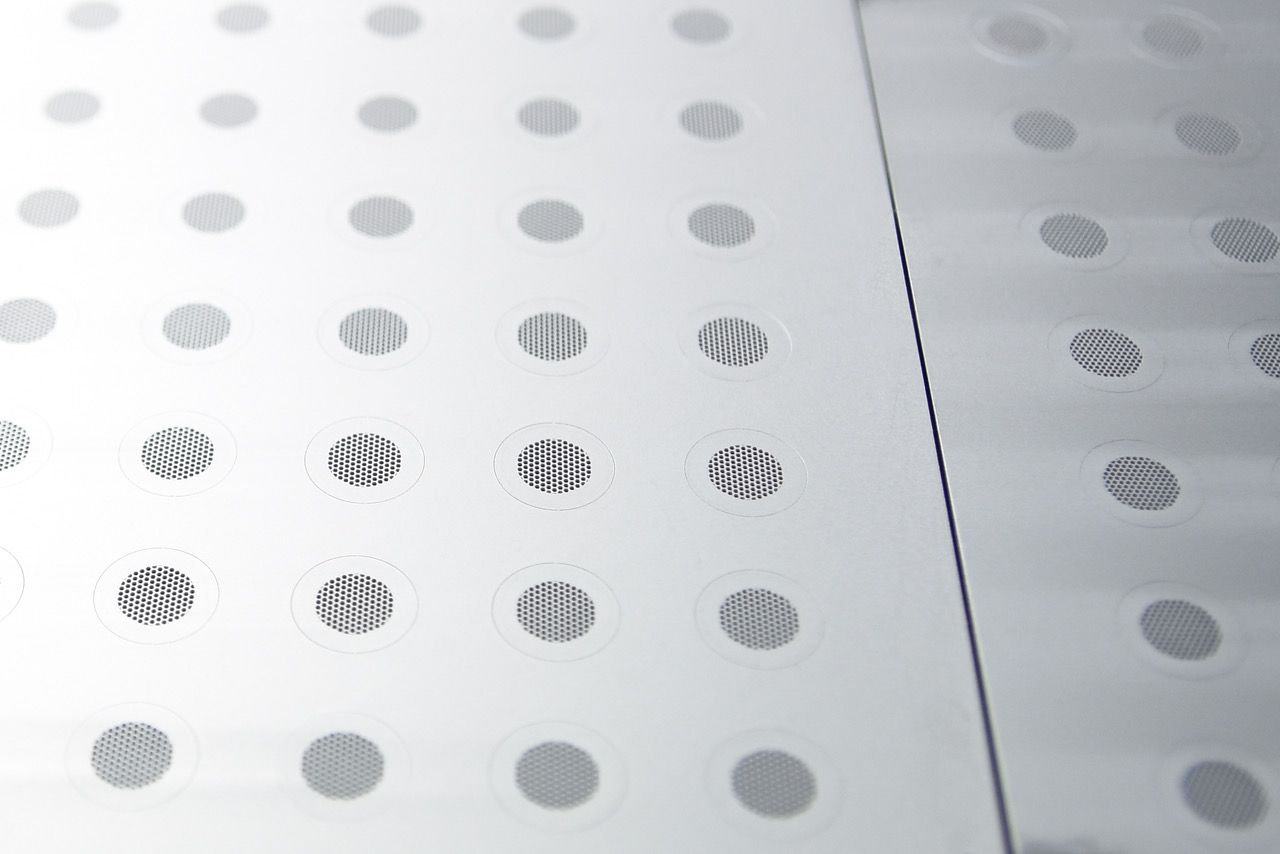
Precious metal coating is often applied on top of a cheaper and significantly less noble metal in order to give the component the properties of a more noble metal. This results in considerable environmental and cost savings compared with manufacturing the entire product, for example, from gold.
The material to be plated may also otherwise be more suitable than, for instance, gold. Aluminium, for example, is a significantly lighter material, which is beneficial in many devices, such as space components. By plating aluminium, however, the properties of a precious metal can still be added to it.
A precious metal coating is a small but decisive factor that directly affects durability, performance, and reliability.
“A metal coating is the interface between the core material and the environment. It helps the product last longer and perform better,” says Eforit expert Sari Virta.
The coating is therefore not merely a finishing touch, but part of the product’s core design.
Protection That Does More Than Protect
The greatest strength of precious metal coatings, such as gold and rhodium, lies in their chemical inertness. They do not react easily with their environment, which makes them effective forms of corrosion protection.
“They make the surface stable. At the same time, they can improve electrical conductivity, reduce friction, and prevent the product from degrading,” Virta explains.
This is directly reflected in use: better performance, fewer faults, and a longer service life.
One Material Does Not Suit Every Application
The choice of coating always begins with the application. Designing a coating for a space device is very different from designing one for an analyser used in an industrial environment.
“Gold is excellent in space applications, for example, because of its IR reflectivity. For highly corrosive conditions, on the other hand, we recommend rhodium, which is even more durable than gold,” Virta says.
Silver, in turn, is the best option when top-level electrical conductivity is required.
“That is why coating should be discussed with an expert already at the early stages of product development – especially when it comes to the thickness of the coating,” she adds.
In coatings, small differences matter greatly. We are talking about micrometres, not millimetres.
“Even if a surface looks golden, it may still be porous. For example, a 0.3-micron gold layer does not yet form a dense surface,” Virta illustrates.
A porous coating allows the base material to oxidize and weakens the product’s electrical and mechanical properties – sometimes unnoticed, until a fault appears.
When the wrong material is chosen, the consequences become visible quickly.
“Silver is not the solution if the aim is to prevent oxidation, for example on the seabed. It corrodes itself,” Virta points out.
The compatibility of different layers is also important:
“If gold is applied directly onto copper, it diffuses into the copper over time. That is why we often use a nickel intermediate layer,” she explains.
Details like these can determine whether a product lasts for years or only for a short time.
NanoDAu – Gold That Lasts
Gold is a soft metal, which limits its use in applications exposed to mechanical stress. For this purpose, Eforit has developed the NanoDAu coating.
“NanoDAu lasts at least twice as long as traditional hard gold plating, and its friction is significantly lower,” Virta says.
It is suitable, for example, for connectors, radar rings, and applications where maintenance is difficult or impossible, such as in space or underwater.
Measurement Makes Quality Verifiable
A high-quality coating is not based on guesswork. That is why coating thickness is measured, for example, using X-ray measurement.
“This allows us to guarantee to the customer that the thickness is exactly what has been promised – and that the coating functions technically,” Virta explains.
Measurement ensures repeatability and a reliable end result. The shape of the product also affects how well it can be plated.
“The coating grows more easily on the edges than in the centre – this is known as the so-called dog bone effect. Blind holes and cavities make the work challenging,” Virta says.
And one practical tip:
“A through-hole makes it easier to hang the piece and establish electrical contact. Otherwise, pressure marks may be left on the component,” she adds.
Life Cycle Costs Are What Matter
A precious metal coating may increase the purchase price, but the overall picture is what matters.
“It extends service life, reduces maintenance, and lowers the rejection rate. This means that the total costs over the product’s life cycle decrease,” Virta sums up.
“When the user experiences the product as reliable, the value of the coating becomes directly visible.”